
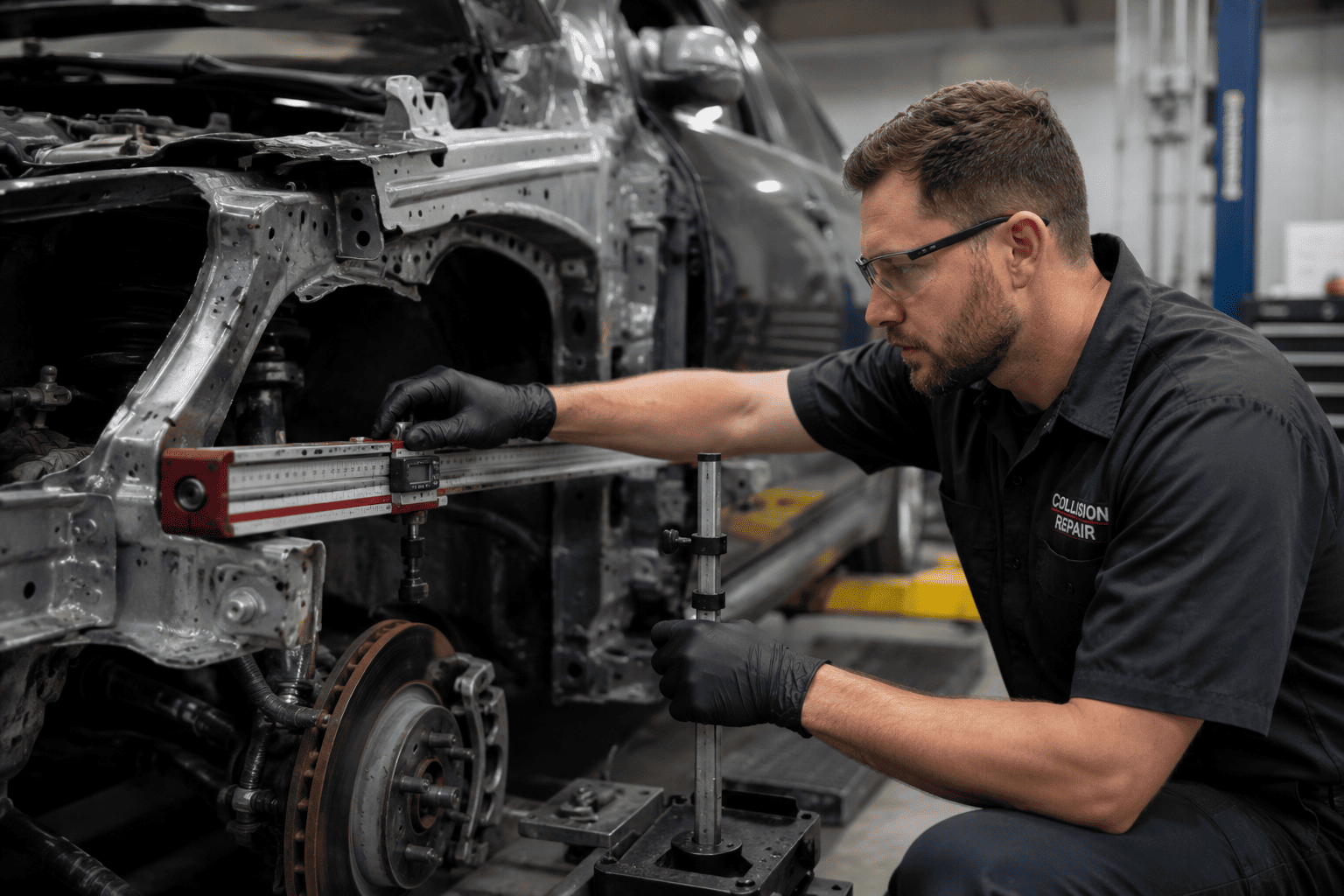
When a repaired vehicle becomes safer than before the accident, it is usually because the repair process corrected issues that may have existed before the collision or because damaged components were restored with precise modern procedures. Safety is not improved by the accident itself. It is improved when the repair addresses alignment, damaged parts, and system calibration with the level of care the vehicle requires.
For drivers, that means collision repair should be viewed as more than cosmetic work. The quality of the repair can affect how the vehicle performs, how systems interact, and how well important components work together afterward.
Why Safety Can Improve After a Proper Repair
A collision can reveal damage or misalignment that needs to be corrected before the vehicle is returned to service. When that process includes accurate measurements, replacement of compromised parts, and confirmation that the repair matches the vehicle’s needs, the finished result may resolve safety-related issues that were not fully addressed before.
That does not mean every repaired vehicle is automatically safer. It means the repair can improve safety performance when the work is done thoroughly and the affected systems are restored correctly.
Repair Steps That Support Better Safety Performance
Precise Alignment and Structural Correction
Alignment affects more than tire wear. It also influences handling, stability, and how the vehicle responds on the road. If the repair process corrects alignment issues and restores damaged structure accurately, the vehicle may drive in a more stable and predictable way than it did immediately before the collision.
Replacement of Damaged Components
Parts that are bent, weakened, or no longer performing correctly can reduce how well the vehicle protects occupants and responds in everyday use. Replacing those components as part of the repair helps restore the systems that support safe operation.
System Recalibration Matters
Many modern vehicles depend on calibrated systems that work alongside steering, suspension, and other related components. When recalibration is handled precisely after repairs, those systems are better positioned to function the way the manufacturer intended.
Why Thorough Repair Standards Matter
Safety improvements come from process discipline, not shortcuts. A careful repair plan helps technicians identify what changed in the collision and what must be corrected so the vehicle performs as expected when it returns to the road.
This is why part replacement, measurements, and follow-up checks matter so much. They support the goal of restoring both appearance and function rather than focusing only on what is visible from the outside.
A Strong Repair Can Restore Confidence
When a repaired vehicle becomes safer than before the accident, it reflects the value of precise alignment, proper part replacement, and accurate recalibration. The right repair process can do more than correct damage. It can help restore the vehicle’s safety performance with greater confidence.
For vehicle owners, choosing a repair approach that takes those steps seriously is one of the most important parts of returning the car to the road.
Bring Your Car’s Paint Back to Life with Inland Empire Autobody & Paint
Whether it’s fading, peeling, or scratches, our expert team is here to restore your car’s appearance and protect its value. Visit us at either of our convenient locations in Riverside or Moreno Valley, CA, and get your free estimate today.
📞 Riverside: (951) 637-1365 | 📞 Moreno Valley: (951) 465-7350
📧 Email us at info@ieabp.com — let’s get your car looking like new again.


