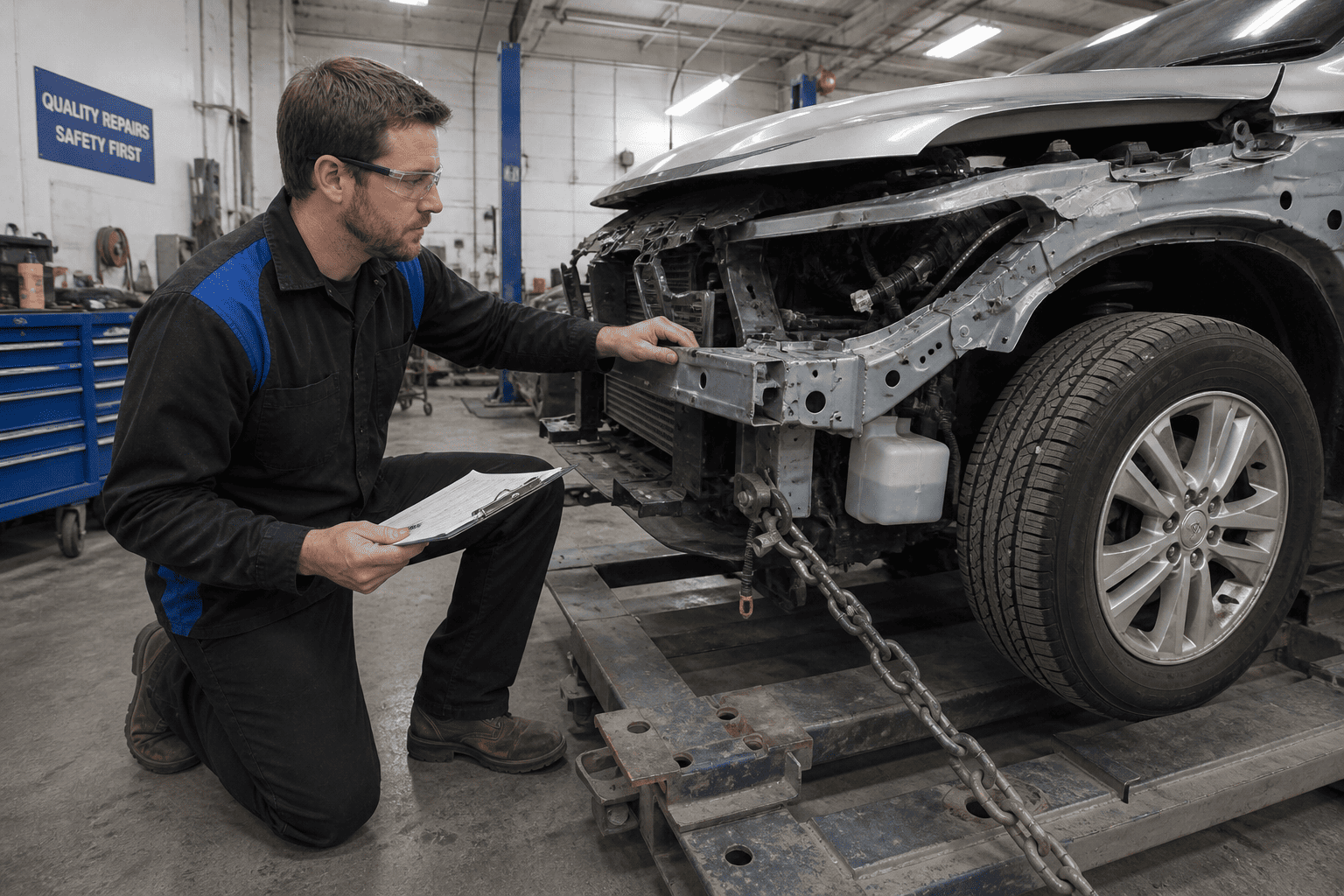
Hidden structural damage after a minor collision is easy to miss because the vehicle may look only lightly damaged on the surface. A bumper cover can appear mostly intact while important components behind it have absorbed force in ways that affect safety, alignment, and future repair needs.
That is why low-speed accidents deserve more attention than many drivers expect. Even when the impact seems small, a professional inspection can reveal whether crumple zones, frame geometry, or safety-related parts were affected beneath the visible damage.
Why Minor Collisions Can Still Cause Structural Problems
Modern vehicles are designed to manage impact energy through specific structural areas. In a low-speed collision, those areas can compress or shift slightly even if the outer panels do not show dramatic damage. What looks like a minor dent or scuff may be hiding deeper issues that need correction.
Because these components are part of the vehicle’s protective design, overlooking hidden collision damage can leave a car with problems that are not obvious during a quick visual check.
What Technicians Look For During a Professional Inspection
Changes in Crumple Zones
Crumple zones are built to absorb energy in a controlled way during an impact. If those sections have been stressed, bent, or partially collapsed, the vehicle may not respond the same way in another collision. This type of damage is often impossible to confirm without proper inspection methods.
Frame Geometry and Panel Alignment
A low-speed hit can alter frame geometry just enough to affect how panels fit, how doors close, or how body lines line up. Slight misalignment may seem cosmetic at first, but it can point to structural movement that should be measured and corrected.
Safety System Impact
Beneath the surface, mounting points, sensors, and related safety components may also be affected. These issues are not always visible to the owner, which is why a trained repair team checks more than the painted exterior after a collision.
Warning Signs Drivers Should Not Ignore
Uneven gaps between panels, a trunk or hood that no longer fits properly, unusual vibration, or steering that feels different after an accident can all suggest the need for further evaluation. Even without those signs, a professional inspection is still a smart step after any impact that transferred force into the body of the vehicle.
The goal is not to assume the worst. It is to make sure collision-related issues are identified before they affect appearance, drivability, or long-term value.
A Thorough Inspection Protects More Than Appearance
Drivers often focus first on visible scratches, dents, or paint damage, but hidden structural damage after a minor collision can matter just as much. Crumple zones, frame geometry, and safety-related components all deserve careful attention after an impact.
A professional inspection helps determine what the vehicle needs so repairs address more than what can be seen at a glance. That approach supports both appearance and proper structural condition after the accident.
Bring Your Car’s Paint Back to Life with Inland Empire Autobody & Paint
Whether it’s fading, peeling, or scratches, our expert team is here to restore your car’s appearance and protect its value. Visit us at either of our convenient locations in Riverside or Moreno Valley, CA, and get your free estimate today.
📞 Riverside: (951) 637-1365 | 📞 Moreno Valley: (951) 465-7350
📧 Email us at info@ieabp.com — let’s get your car looking like new again.